

Sixty-three percent of CPG brands point to disconnected workflows as their top frustration. One app for shelf audits, another for orders, and spreadsheets for drivers — it’s a common mess.
Most retail execution platforms stop at taking photos of gaps. They rarely close the full order loop. Meanwhile, field sales tools often capture reorders but skip planogram checks or shelf documentation.
True all-in-one solutions that combine execution, ordering, and DSD are uncommon. Picking the best one depends on what matters most to you: enterprise compliance, affordable pricing, or multi-currency capabilities.
We evaluated nine platforms on execution strength, order integration, DSD features, pricing transparency, and CPG-specific fit. They differ more than you might expect.
| Firm | Best for | Founded | Notable specialty |
| SimplyDepo | CPG brands needing unified audit + order + DSD | 2022 | Unified audits, field sales, and DSD for SMB CPG teams |
| Repsly | Mid-to-large CPG audit-only teams | 2008 | AI-powered shelf image recognition |
| GoSpotCheck | Enterprise compliance workflows | 2011 | PhotoWorks AI for shelf surveys |
| Skynamo | International B2B sales teams | 2012 | Multi-region, multi-currency field sales |
| WizCommerce | AI-driven wholesale commerce | 2020 | AI catalog management & quote automation |
| Orders in Seconds | DSD-focused wholesale distributors | 2005 | QuickBooks Desktop/Online specialist |
| SPOTIO | Territory-based field sales tracking | 2014 | Route optimization & activity leaderboards |
| Zoey | B2B eCommerce-first wholesalers | 2014 | Self-service customer portals |
| B2B Wave | Small wholesalers needing simple portals | 2013 | Easy-to-use branded storefronts |
What Retail Execution Software Does
At its core, retail execution software combines shelf audits, planogram compliance, photo reporting, and visit tracking in one place. Many platforms also include order capture, DSD routing, van sales, and invoicing.
CPG brands and distributors adopt these tools to bridge the gap between what’s happening on shelves and what’s actually being sold. Most still rely on separate apps and spreadsheets for different parts of the job.
This category mainly serves CPG merchandiser teams, DSD wholesale distributors, and manufacturers with broader B2B sales forces.
Key pain points remain manual handoffs, weak offline access in rural areas, and compliance reports that don’t connect to reordering.
Larger enterprises tend to choose specialized audit platforms with AI features, while SMBs want unified workflows at clear prices. International users prioritize multi-currency and solid ERP connections.
Platform Overview
Each platform below approaches retail execution differently. Some focus on audits and compliance, while others prioritize sales, delivery, or B2B order management.
Repsly — Audit-First Platform with AI Shelf Recognition
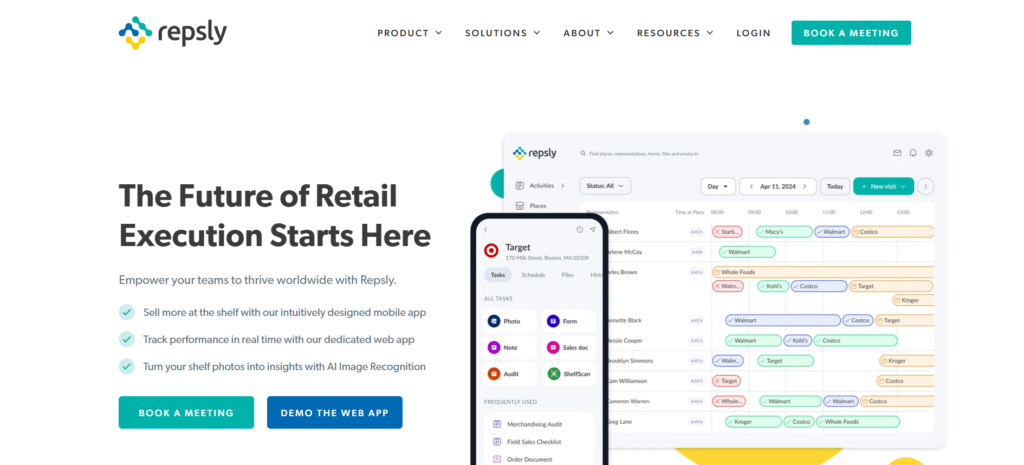
Repsly is a retail execution tool designed for CPG brands and merchandising teams looking for better in-store visibility.
Since launching in 2008, the platform has focused on helping field reps collect clean data during visits and turn it into actionable insights. It’s especially strong for shelf audits, planogram checks, and monitoring product availability.
Its AI image recognition feature stands out — it scans shelf photos, identifies items, and measures compliance. As a result, teams spend less time on manual reports and get more accurate SKU data.
Strengths:
- AI-powered ShelfScan image recognition for automated compliance scoring
- Field team management with visit tracking, territory optimization, task assignment
- Real-time dashboards with performance reporting for managers
- Competitor monitoring and promotion execution standardization
Limitations: Users report that back-office functions can feel clunky and poorly organized, along with occasional app logouts, stability problems, and usability issues in certain workflows. (G2 reviews)
Who Should Still Choose Repsly
The platform is primarily positioned as a retail execution and merchandising solution. While it offers some order and return tracking capabilities, it does not cover full order-to-cash workflows or DSD operations.
Teams that need unified audit + order + delivery workflows in one app will need to layer Repsly with a separate field sales or DSD system.
SimplyDepo — Unified CPG Workflow from Audit to Invoice
SimplyDepo is a retail execution platform built from the ground up for CPG brands and distributors. This mobile-first app brings shelf audits, planogram compliance, photos, in-store activities, and visit tracking together with order taking, DSD route planning, van sales, and invoicing — all with QuickBooks and Shopify sync.
Since its launch in 2022, it’s been focused on fixing a common headache. Instead of jumping between different systems, reps can audit shelves, place reorders, plan routes, run deliveries, and sync data to accounting — all in one offline-friendly app that doesn’t break the bank for SMB teams.
It stays strictly CPG-focused and adds useful AI insights that help predict demand, spot strong and weak products, improve routing, and highlight compliance issues right away.
The platform competes by offering more than basic audit tools, without the complexity and cost of heavy enterprise solutions or the narrow focus of simple field sales apps.
| Feature | Coverage |
| B2B Order Management | Order capture, quotes, invoicing, returns |
| Retail Execution | Shelf audits, planogram compliance, photo logs |
| Route Planning | AI-optimized delivery routes, van sales |
| Visit Scheduling | Territory coverage, activity tracking |
Pricing starts at $89/rep/month with no annual contracts, no setup fees, and a 30-day free trial with training included. Teams get up and running in days without long implementation cycles. Works in low-connectivity environments such as rural stores, warehouses, or trade shows, with automatic sync once online.
Limitations: Limited to US and Canada operations and best suited for teams with active field sales, merchandising, or DSD workflows.
Who Should Still Choose SimplyDepo
SimplyDepo is a strong fit for SMB and mid-market CPG brands and distributors operating in the US or Canada that rely on in-store visits. Teams that need to connect shelf audits, order capture, and delivery workflows in one system will benefit the most.
It is especially useful for companies that want to replace multiple tools (audit app + order app + spreadsheets) with a single mobile workflow and avoid enterprise-level pricing or long implementations.
GoSpotCheck (FORM) — Enterprise Task & Compliance Workflows
GoSpotCheck, now under FORM, is a mobile field execution platform built for frontline teams that need structured tasks and real-time visibility.
Founded in 2011, it specializes in task management, data collection, and compliance tracking during store visits. Teams use it to run audits, complete surveys, capture photos, and follow consistent workflows across locations. Its image recognition feature stands out — it analyzes field photos to check product placement, compliance, and quality.
Key capabilities include:
- Flexible workflow builder to customize task flows
- PhotoWorks AI for automated photo analysis
- Real-time dashboards for monitoring team performance
- Support across multiple industries like consumer goods, retail, and hospitality
GoSpotCheck also includes tools for workflow building, enabling teams to customize task flows based on operational needs. Managers can monitor execution through dashboards that provide real-time insights into team activity and performance.
Limitations: Some users mention connectivity issues, and the platform is positioned around field execution/audits rather than order capture, invoicing, or DSD workflows. (G2 and Capterra reviews)
Who Should Still Choose GoSpotCheck (FORM)
Suits large teams needing compliance visibility. Quote pricing, 20-user minimum. Small teams prefer transparent per-rep pricing and fast setup. Better for execution than sales or DSD.
Skynamo — International Field Sales with Multi-Currency Support
Skynamo is a field sales and B2B sales operations platform built for manufacturers, wholesalers, distributors, and importers.
Founded in 2012, Skynamo combines a mobile field sales app with tools for inside sales and customer self-service. Sales representatives can use it to manage visits, access product catalogs, and place orders directly while in the field. At the same time, customers can place orders through a branded B2B portal.
| Module | Function |
| Mobile field sales | Visit logging, order capture, and offline-first |
| Inside sales | Internal team order management |
| Customer portal | B2B self-service ordering |
| Radar AI | AI-driven sales insights and trend analysis |
Skynamo unifies field sales, internal sales teams, and online-style ordering. It connects with your current systems to maintain consistent pricing, customer data, and order information.
Limitations: Users mention limited app layout customization and occasional connectivity issues. It is stronger for sales operations than dedicated retail execution. (G2 and Capterra reviews)
Who Should Still Choose Skynamo
Skynamo suits companies with complex B2B sales structures and international operations, especially in EMEA. Its quote-based pricing and multi-currency strength appeal to larger or global teams.
US-focused SMB distributors, however, often prefer options with simpler per-user pricing and direct QuickBooks sync.
WizCommerce — AI-Powered Wholesale Commerce & Rep Orders
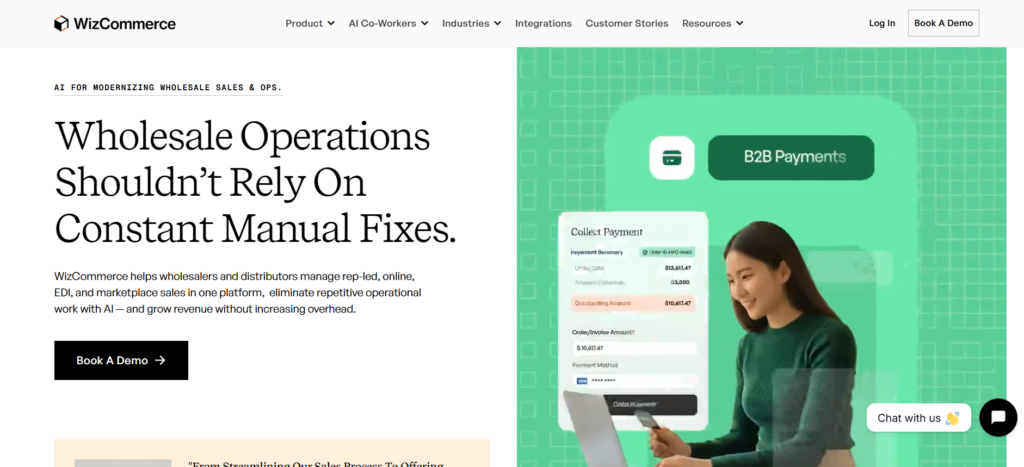
WizCommerce is an AI-powered B2B sales and eCommerce platform designed for wholesalers, distributors, and manufacturers.
Founded in 2020, it combines a digital B2B storefront with tools for sales reps to capture orders, create quotes, and manage customer relationships. The platform also supports payments and handles orders across multiple channels, including marketplaces and EDI.
Its AI features help automate everyday tasks:
- Auto-generating product catalogs and smart search
- Creating quotes and making personalized product recommendations
- Prioritizing follow-ups and forecasting sales
- Providing real-time visibility into inventory, orders, and customer activity
It integrates with ERP, accounting, and inventory systems to keep everything in sync.
Cons: Users list some weaknesses around the learning curve, inaccuracy, complex implementation, accuracy issues, and access issues. It is not positioned for shelf audits, merchandising, or retail execution. (G2 reviews)
Who Should Still Choose WizCommerce
WizCommerce works best as a B2B commerce and order management platform, especially for teams focused on digital sales and automation.
While it supports field sales reps, it doesn’t cover retail execution needs like shelf audits, planogram compliance, or DSD workflows.
Orders in Seconds (OIS) — DSD & QuickBooks Integration Specialist
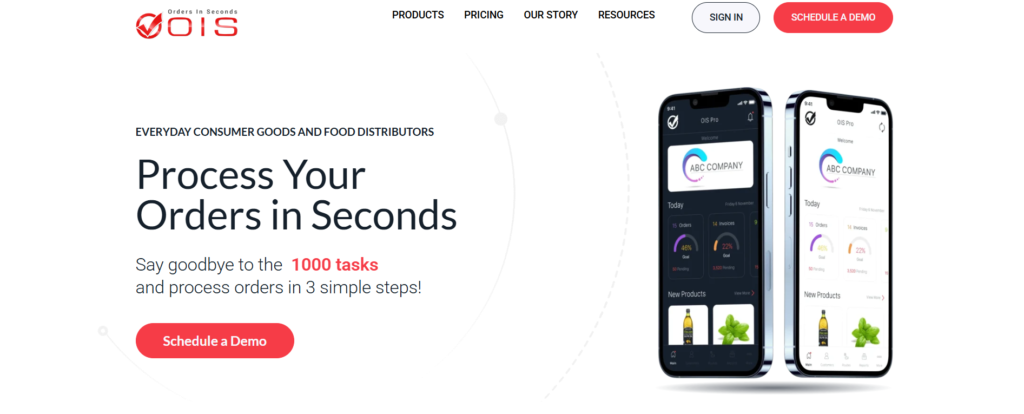
Orders in Seconds (OIS) is a B2B order management and mobile sales platform built for wholesale distributors, especially those in consumer goods and food distribution.
Founded in 2005, it focuses on making order entry, inventory checks, and delivery workflows much simpler for field sales teams. Reps can use the mobile app to capture orders quickly while on the road, with real-time inventory visibility so they never promise something that’s out of stock.
Key features include:
- Fast mobile order entry with live inventory
- B2B eCommerce storefront for customer self-service
- Warehouse and inventory management tools
- Route planning and delivery management
- Native integrations with QuickBooks, SAP, Sage, and NetSuite
Cons: OIS is focused on order management, inventory, eCommerce, and delivery workflows, not dedicated retail execution features like shelf audits or planogram compliance. (OIS website)
Who Should Still Choose Orders in Seconds (OIS)
OIS works well for wholesale distributors who want a practical, straightforward tool for order taking, inventory accuracy, and efficient deliveries. It’s particularly useful for teams with DSD routes or field sales reps whose main job is placing and fulfilling orders.
SPOTIO — Territory-Based Field Sales Activity Tracking
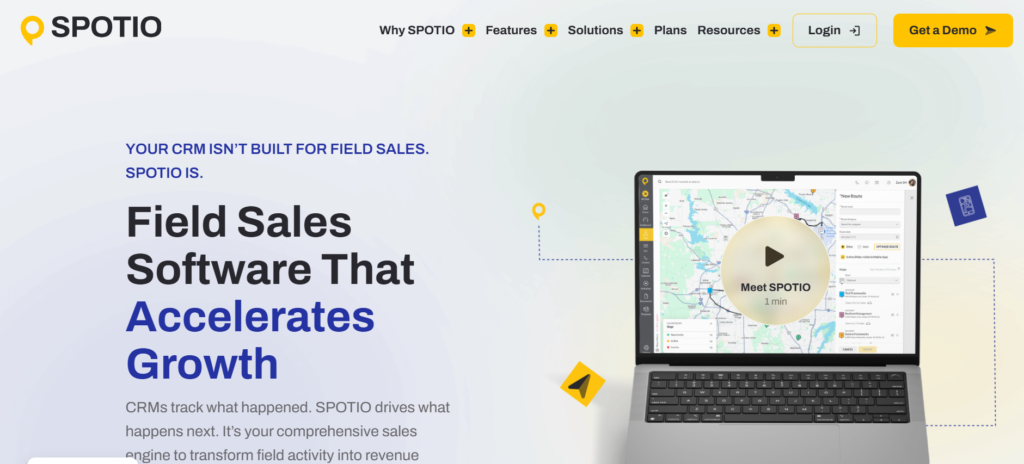
SPOTIO is a practical field sales platform for sales teams focused on territory selling. It helps track activities and improves pipeline visibility.
Since launching in 2014, it has concentrated on supporting reps in the field — from finding leads to closing deals. Key features include lead management, territory mapping, and route optimization, so teams can plan visits smarter and cover their areas more effectively.
Pros:
- Real-time activity tracking for field performance monitoring
- Performance analytics, leaderboards, and coaching tools
- Automation for follow-ups and data entry
- AI-assisted sales planning and insights
- CRM integrations to keep customer and activity data synchronized
Cons: Users report connectivity issues, glitches, and weaker reporting in some reviews. It is not built for order processing, DSD, or retail execution. (G2 and Capterra reviews)
Who Should Still Choose SPOTIO
SPOTIO is a field sales tool for prospecting and territory management. Suited for construction, telecom, and business services. CPG teams need separate audit/order software.
Zoey — B2B eCommerce with Self-Service Customer Portals
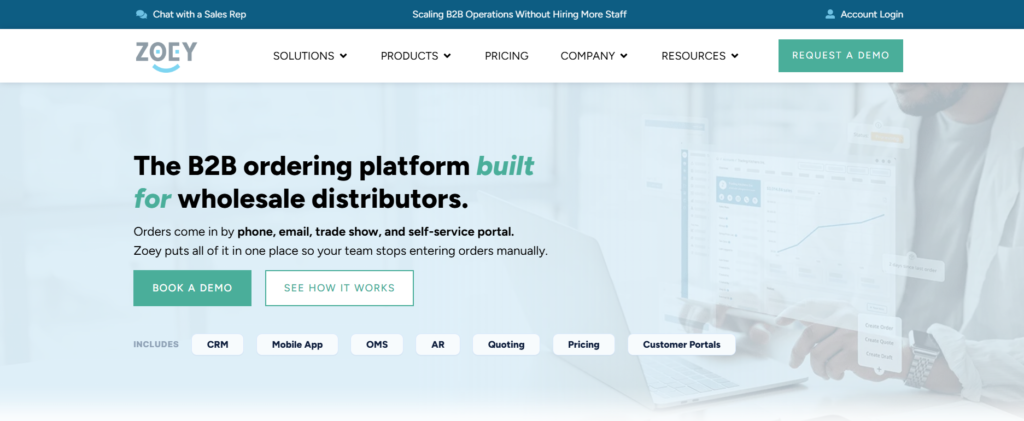
Zoey is a B2B eCommerce and order management platform for wholesalers, manufacturers, and B2B brands. Founded in 2014, it processes orders from sales reps, customer portals, phone, and email.
Customers use a self-service portal with custom pricing. Sales teams use mobile and desktop tools for quotes and account management. It includes CRM, order processing, automated billing, and AR functions with integrations to NetSuite, QuickBooks, and ShipStation.
Cons: Users report slow customer support response times and limited real-time assistance. Email-only support delays issue resolution. (G2/Capterra reviews)
Who Should Still Choose Zoey
Zoey works well for wholesale businesses that want to centralize orders and give customers self-service options. It’s a solid fit if your focus is on B2B eCommerce, quoting, invoicing, and back-office efficiency. Teams that don’t need strong field execution or in-store tools will likely get the most value from it.
B2B Wave — Simple Branded Storefronts for Small Wholesalers
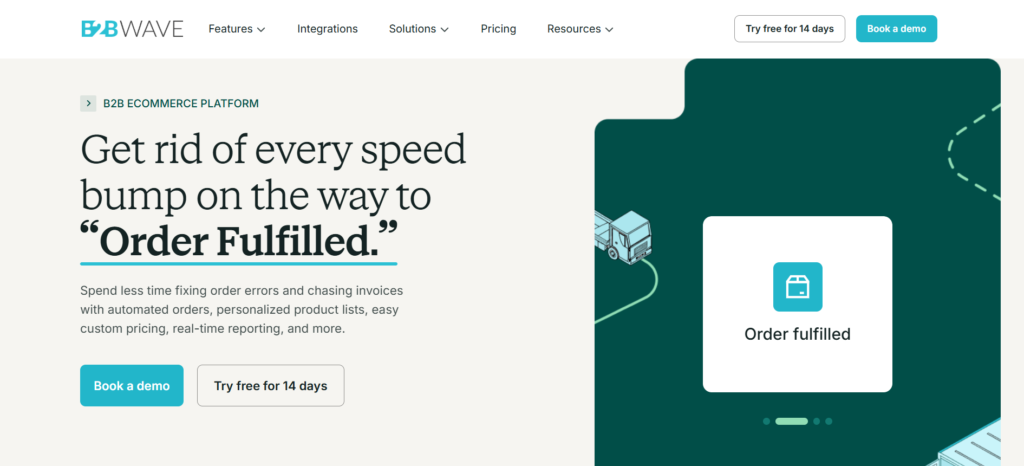
B2B Wave is a simple platform for wholesale distributors and manufacturers to handle online orders, customer info, and pricing in one place. Since 2013, it has helped reduce manual tasks.
It provides a branded storefront for easy browsing, personalized pricing, and ordering. You also get inventory tracking, custom pricing, discount rules, reporting, and self-service portals.
It integrates well with QuickBooks, Xero, Stripe, and ShipStation to keep data consistent.
Cons: Weak reporting, limited integrations, poor large-catalog performance. (G2 reviews)
Who Should Still Choose B2B Wave
It’s a great fit for smaller and mid-sized wholesalers who want a simple, effective B2B eCommerce solution centered on online sales and customer portals — especially if you don’t rely on field sales or DSD processes.
How to Choose Retail Execution Software
Picking the best retail execution tool comes down to matching it with your actual needs. Key things to compare:
- Workflow scope — Audit-only platforms need a separate ordering system. Unified tools like SimplyDepo combine shelf audits and reorders in one app.
- Company background — Older platforms bring stability. Newer tools often move faster on mobile features and SMB-friendly pricing.
- Geographic reach — US/Canada-only tools can limit multi-region work. International solutions like Skynamo cover EMEA and APAC.
- Pricing style — Clear per-rep monthly rates suit smaller teams. Quote-only pricing usually targets enterprises.
- DSD capabilities — Full route planning, van sales, and invoicing vs basic activity tracking.
Finally, check integrations. QuickBooks and Shopify support matters most for SMB distributors, while bigger setups need NetSuite, SAP, or Sage.
Conclusion
We evaluated platforms based on retail execution strength, order integration, DSD features, pricing transparency, and how well they serve CPG teams. Our analysis used official data, company track records, and real integration capabilities — skipping hype and unverified claims.
The biggest ongoing challenge for CPG brands and distributors remains the same: audit tools rarely connect with ordering systems, and DSD apps often ignore planogram compliance. While many platforms solve only part of the puzzle, the stronger ones close the full loop from shelf check to invoicing.
Map your operational gaps first. A short vendor call can prevent you from buying a tool that fixes only half the problem.